
written by JOHN MARK MINES | SUCCESS, IMPACT, SERVICE
The world will little note, nor long remember what we say here, but it can never forget what they did here.
Abraham Lincoln
Remember Me
What do these things have in common: a golf course, a tower, a university, and a performing arts center?
Memorial Day was established for a specific kind of remembrance. Originally known as Decoration Day, the holiday was designed to ensure fallen soldiers would not be forgotten.
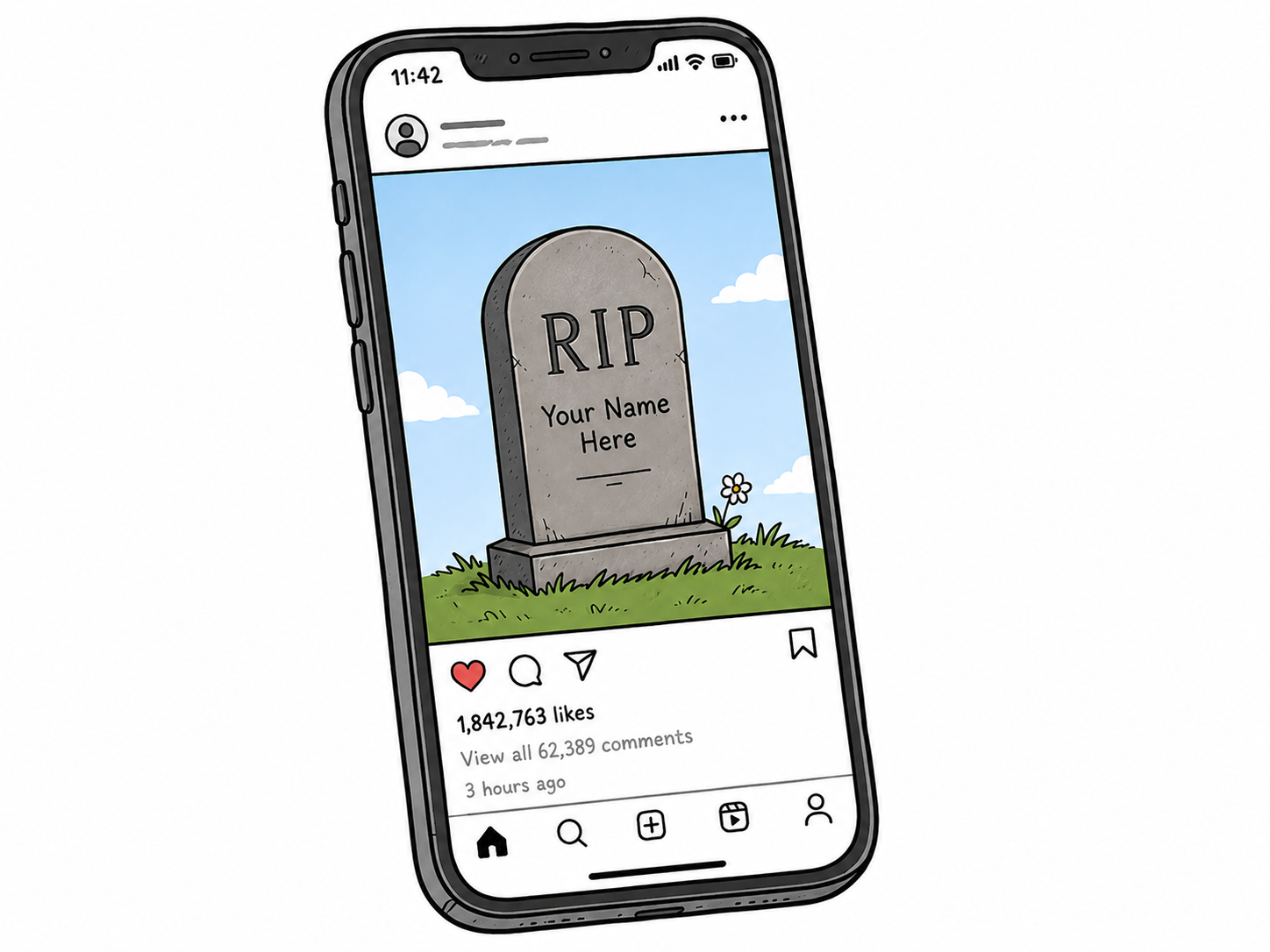
As we confront our own mortality, there is a temptation to go out with a bang — to guarantee legacy by plastering our names across buildings in thirty-foot gold letters. A name on a gravestone remains largely unnoticed; a name on an airport is not.
We all want to be remembered, but memory is fragile and fame is fickle. This raises the question: what is the best way to be remembered?
Like It Was Yesterday
Memory is essential yet corruptible. Because we rely on it so deeply for our sense of truth, we like to believe that we remember events exactly as they happened. Alas, we do not.
Psychological research has repeatedly demonstrated the unreliability of memory. In one experiment, a single doctored childhood photo caused nearly half of participants to recall false memories.
In another study, students documented how they learned about the Space Shuttle Challenger disaster immediately after the tragedy and then again years later. As expected, the accounts differed… But that’s not all.
The researchers discovered that confidence had little relationship to truth. Some participants were completely certain about events that never happened. Sincerity and accuracy are not synonymous.
Faulty memory has real-world consequences. Ronald Cotton spent ten years in prison before DNA evidence proved he had been wrongly convicted. The victim’s eyewitness testimony was genuine. She wasn’t wrong; her memory was.
Memory requires maintenance. Like a garden, it must be carefully tended; otherwise, it begins to wither. Or worse, it can become overgrown with illusion.
For better or worse, memory fades with time. Perhaps that is why people work so hard to become unforgettable. Yet admiration is as fickle as memory itself.
Modern Warfare
History is crowded. The fortunate few have their names embossed on boulevards and faces imprinted on dollar bills. This kind of success means more than wealth: it means immortality.
Perhaps more than ever, life is a popularity contest. Social media has turbocharged attention-seeking into a full-time profession. Visibility is no longer the result of success: it is success.
More than 35 years ago, Stephen Covey documented this trend in his book, The 7 Habits of Highly Effective People. After studying the evolution of American success literature, Covey concluded that it had become increasingly “filled with social image consciousness, techniques, and quick fixes.”
Covey noticed the “character ethic” was getting replaced by the “personality ethic.” Success became increasingly tied to image, influence, and perception rather than integrity, humility, or principle. External validation became prioritized over internal growth.
This trend has intensified since Covey’s time. The personality ethic has evolved into the algorithm ethic. Going viral matters more than developing character. Self-promotion eclipses self-discipline. Visibility has become its own virtue.
History is filled with cautionary tales about what happens when popularity replaces principle. One of the clearest examples was World War II, where conformity, fear, and the pursuit of power overwhelmed moral conviction.
Correcting that failure cost millions of lives. Those who paid that price are the ones worthy of memoriam: the ones who chose service over status and principle over popularity, even at the cost of their own lives.
The Tomb of the Unknown Soldier
Does that mean ordinary people are destined to disappear into history? Not at all. The most meaningful legacies are not encapsulated by monuments or immortalized in headlines. They are living legacies, carried forward in the lives of others.
When I was young, I had a wee bit of a speech impediment. Any word with an ‘R’ would get caught in my throat. My accent was a mix of British and gibberish.
Alas, my name is John Mark. Introductions immediately exposed my flaw. First impressions were not my strong suit.
After years of failed speech therapy in the California public school system, my grandfather quietly paid for private lessons. I can still picture the drive there: my mom driving our ’98 Camry, Christmas music crackling through old cassette tapes, and me repeating the same exercise over and over again — a-ray, e-ree, i-rye, o-row, u-ru.
Surprisingly, improvement came quickly. Within a few months, I could finally say my own name. I declared independence from the British like it was 1776.
In terms of legacy, there are no towers or golf courses that bear my grandfather’s name. Yet every time I say my name, he is there. Often the loudest acts of service are those done in silence.
Vanity cannot immortalize us. People are not tools for attention or applause; they are the reason sacrifice matters. History may forget you, but to the people whose lives you changed, you are unforgettable.
To know even one life has breathed easier because you have lived. This is to have succeeded.
Ralph Waldo Emerson
